2nd Grade Value & Place Value Worksheets
Free value & place value worksheets with answer key. No login or account needed. From placing commas to identifying place value, visual or word problems we've got you covered. A grading column and quick grade scale maker grading a breeze and a modified pages help with lower level learners or when just introducing a topic. Great for teachers or for homeschool.
About these worksheets
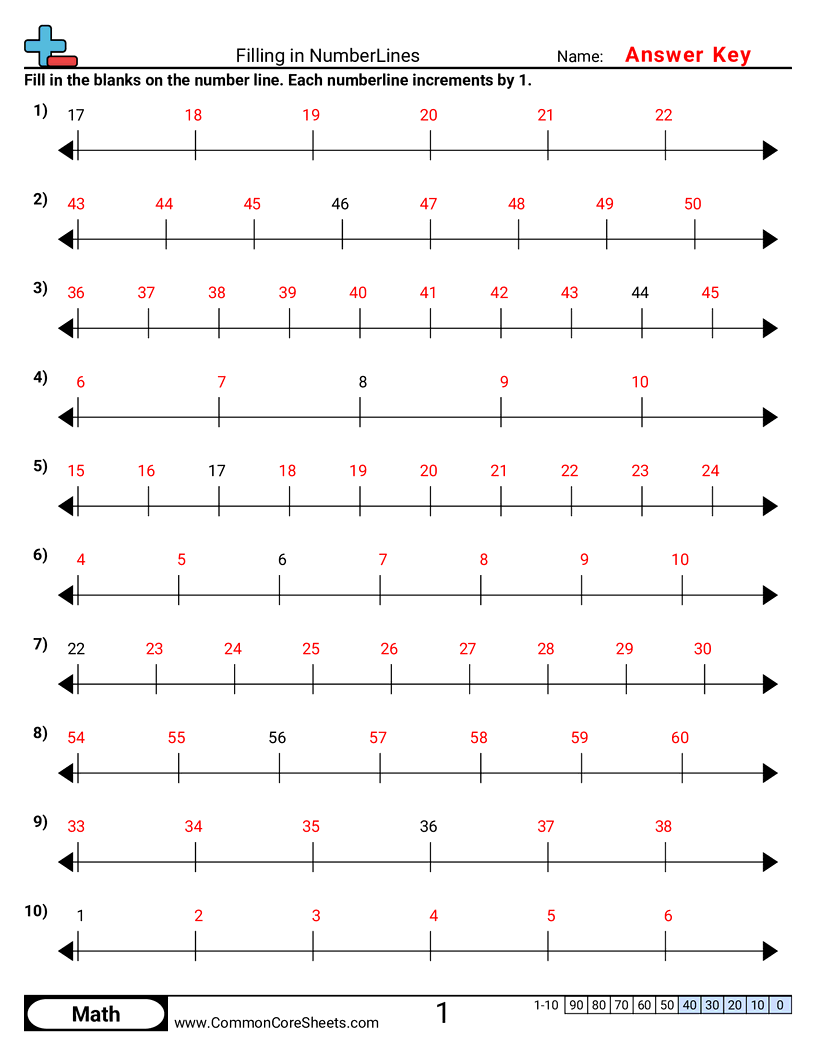
Students work with number lines and place value mats to build number sense. Worksheets include filling in missing values on number lines, reading place value mats, interpreting non-traditional number lines that don't start at zero, and marking values on open number lines within 20 and within 100. Aligned with second grade and general number sense standards.
About these worksheets
Students use base-ten blocks to build understanding of place value. Worksheets progress from identifying values with tens and ones blocks, to working with hundreds blocks, creating and identifying groups of 100, and determining values shown by blocks up to 1,000 and beyond. These concrete visual models make abstract place value concepts tangible for first and second graders.
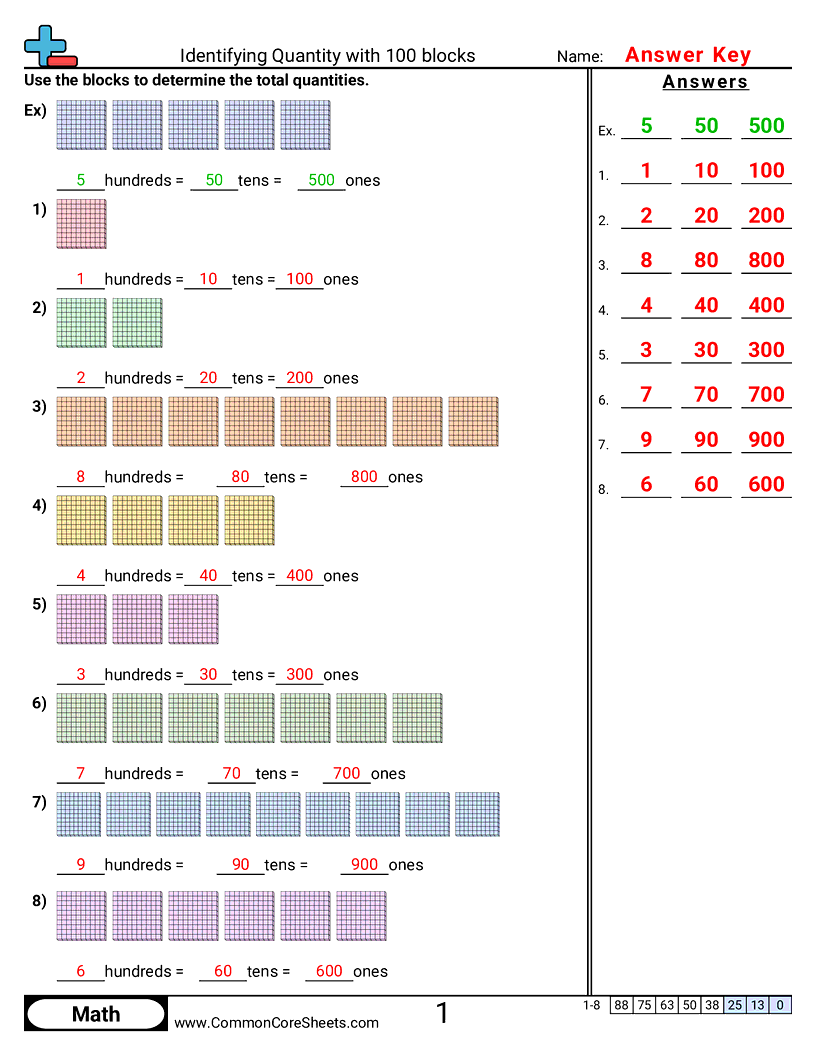
Identifying Quantity with 100 blocks.
- Read base-ten block pictures and tell how many hundreds, tens, and ones they show.
- Break a number into hundreds, tens, and ones to explain what each digit means.
- Count groups of 100s, 10s, and 1s without counting every single block one by one.
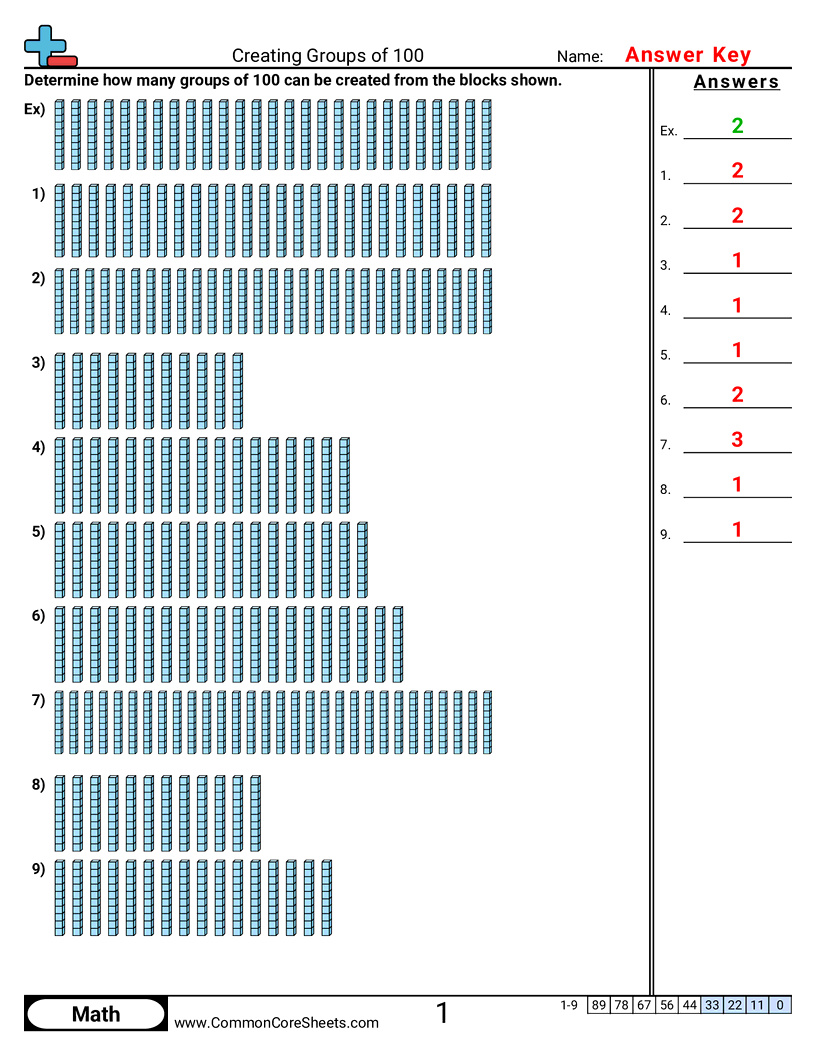
Creating Groups of 100
- Count by tens to find how many items are in a set of ten-bundles.
- Use groups of ten to make and recognize 100 as 10 tens.
Identifying Groups of 100
- Recognize when a picture or set of objects shows groups of 100.
- Count how many hundreds are shown by counting the groups.
- Tell the value of the groups using hundreds (like 3 groups of 100 is 300).
- Connect groups of 100 to the hundreds place in a number.
About these worksheets
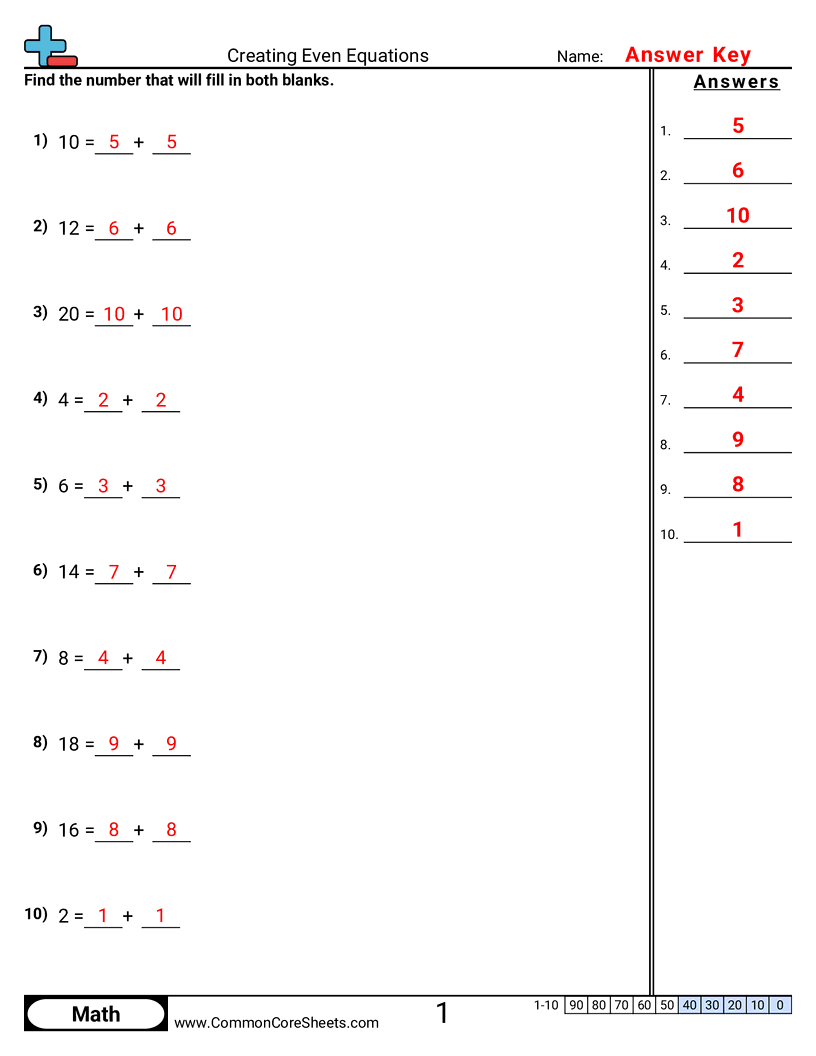
These worksheets develop number comparison and identification skills across grade levels. Activities include finding more and less, comparing two- and three-digit numbers and numbers within one million using inequality symbols, identifying even and odd numbers visually, creating even equations, building numbers from place value descriptions, using place value for multiplication and division, identifying integers, comparing relative size with addition and subtraction, and evaluating number sentences. Resources span first through fourth grade and beyond.
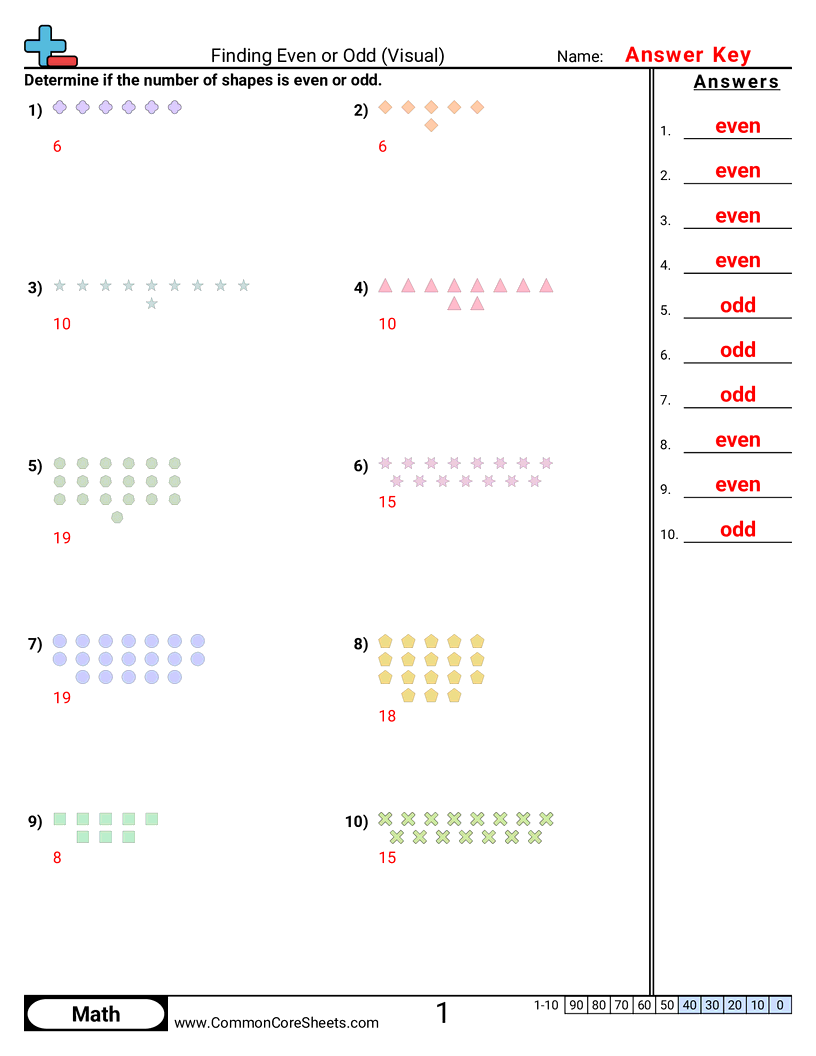
Finding Even or Odd (visual)
- Count a group of shapes and decide if the total is even or odd.
- Use pairing to see if every shape can be matched with a partner with none left over.
- Explain even and odd using simple words like "pairs" and "one left."
- Recognize that even numbers can be split into two equal groups and odd numbers cannot.
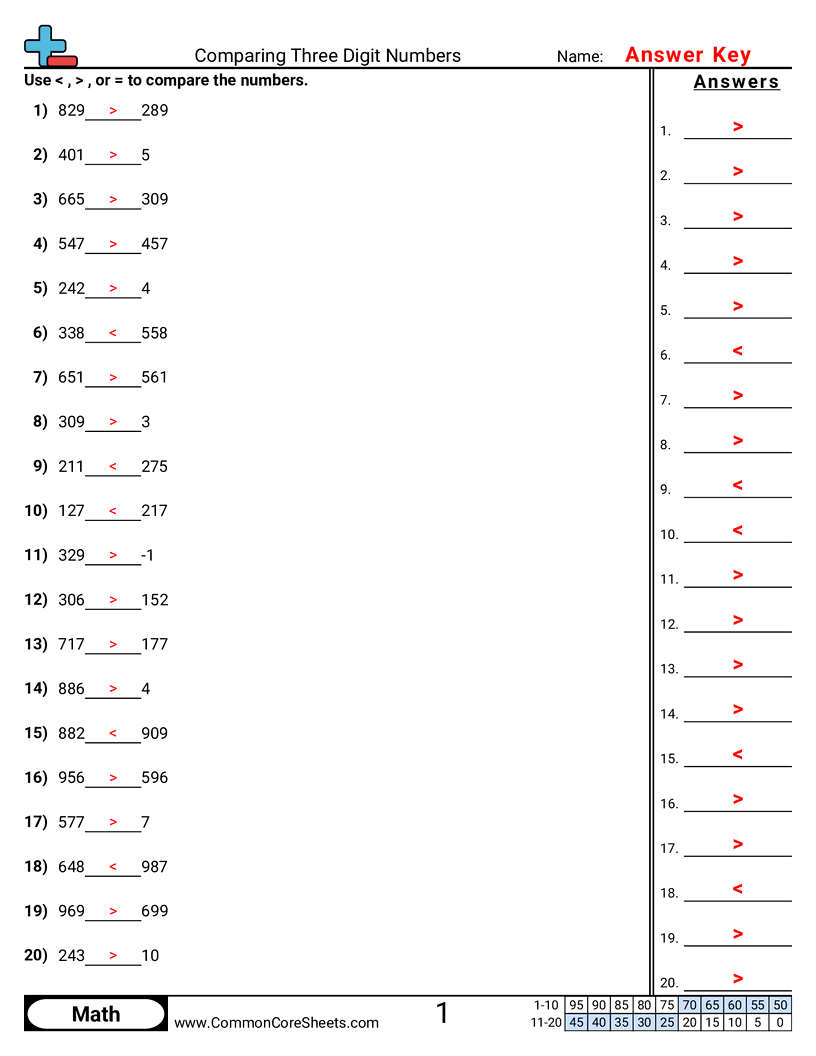
Comparing Three Digit Numbers
- Compare two three-digit numbers and decide which one is greater, less, or equal.
- Use the hundreds, tens, and ones digits to explain why one number is bigger than another.
- Read and use the symbols >, <, and = correctly when comparing numbers.
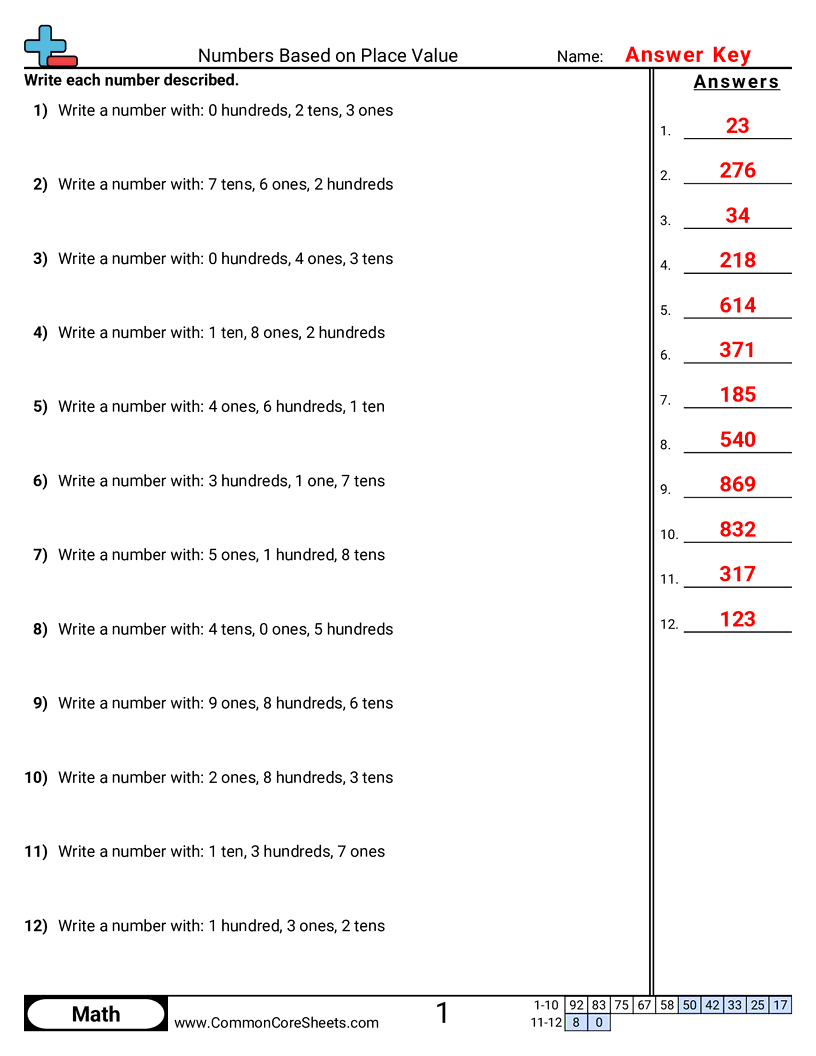
Understanding Places (3 Digit)
- Use hundreds, tens, and ones to build a 3-digit number.
- Read a place-value description and write the number in standard form.
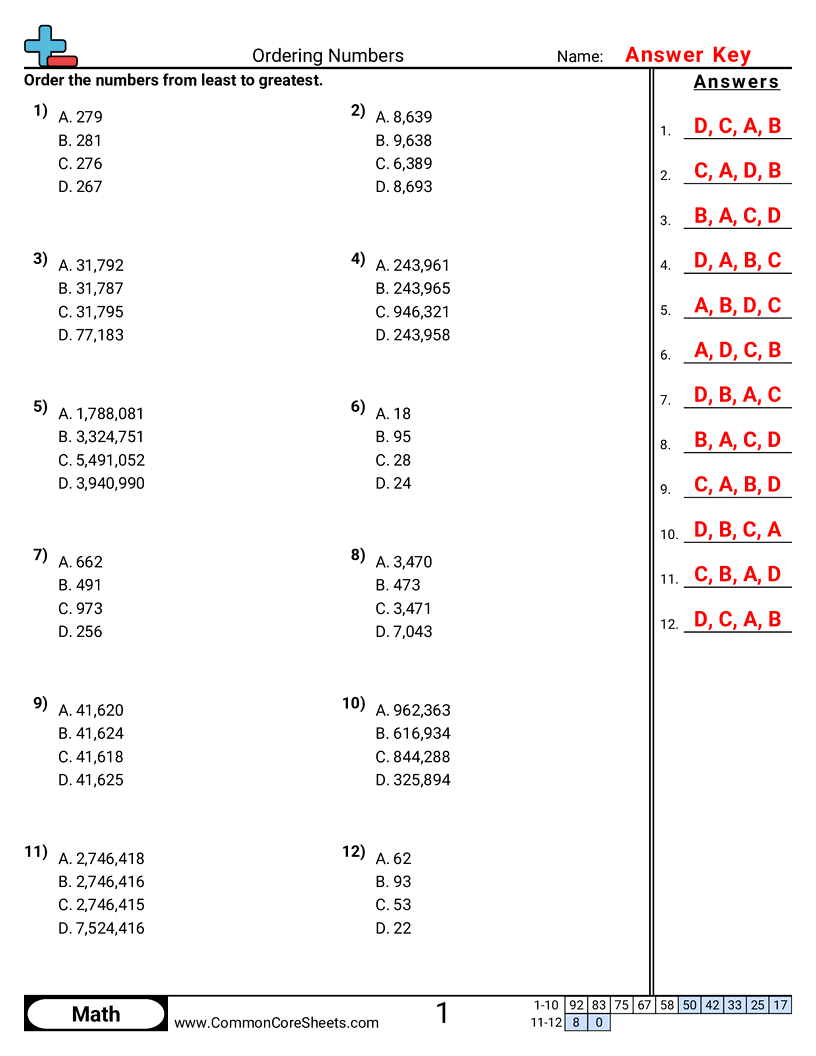
Comparing Three Digit Numbers
- Use the hundreds, tens, and ones digits to explain why one number is bigger than another.
- Put several three-digit numbers in order from least to greatest or greatest to least.