addition Counting Worksheets
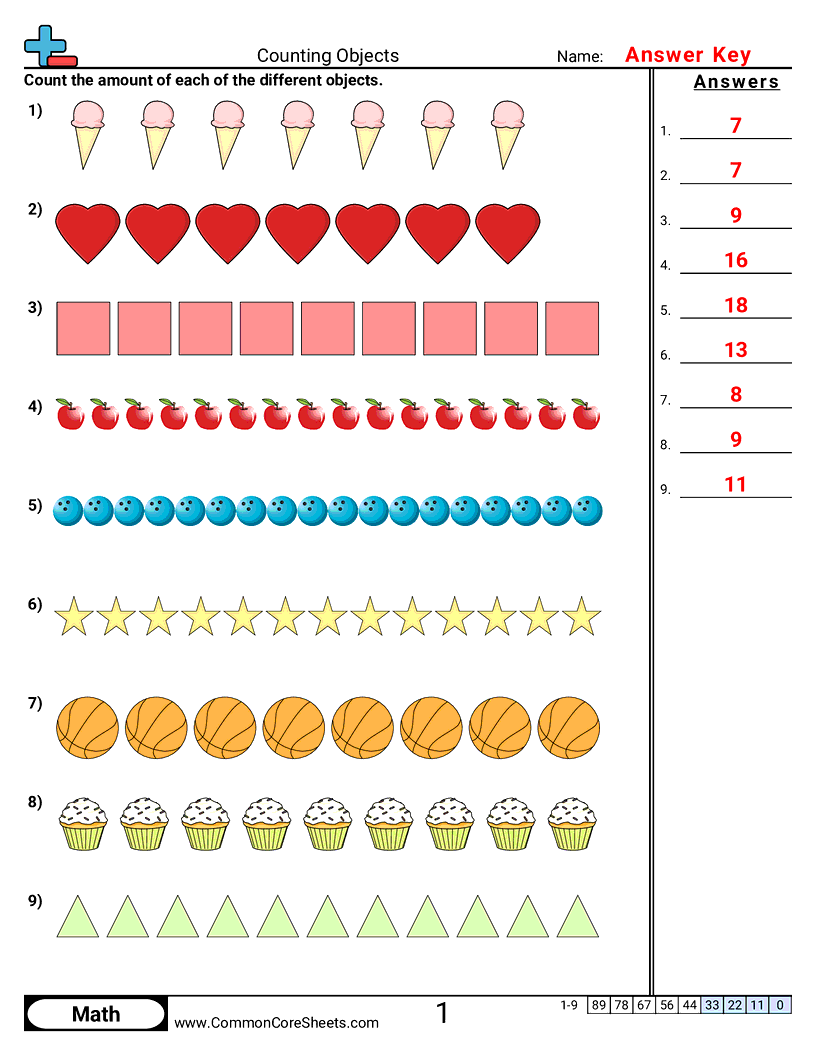
These addition counting worksheets help students practice fundamental counting skills while building addition concepts. Students count shapes, continue number sequences, and practice skip counting patterns. Perfect for developing number sense and preparing for more advanced addition problems.
About these worksheets
These worksheets build foundational counting skills for early learners. Activities include counting objects and shapes, continuing counting sequences up to 120, counting groups of ten, and counting up from starting numbers by 5s, 10s, and 100s. Designed for kindergarten through second grade, these resources help students develop number recognition and one-to-one correspondence.
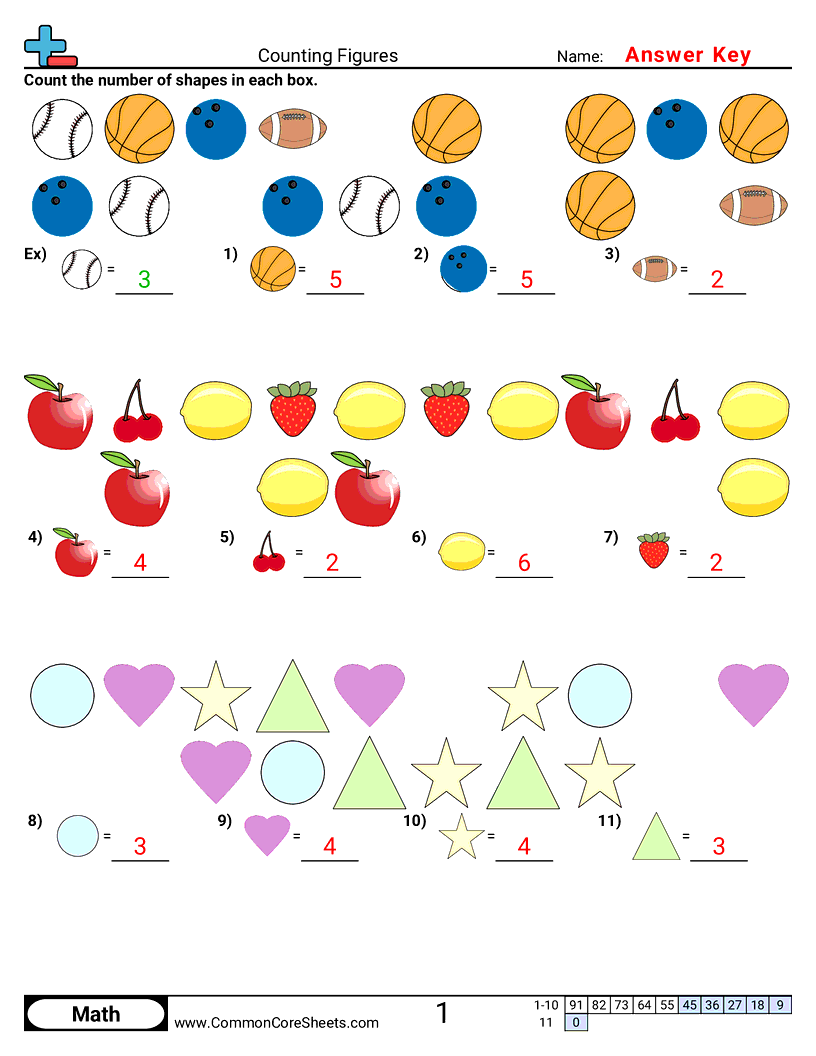
Counting Figures
- Count how many shapes are in a picture.
- Keep track while counting so you don’t skip or double-count a shape.
- Write the total number of shapes you counted.
- Count shapes that are arranged in different groups or patterns.
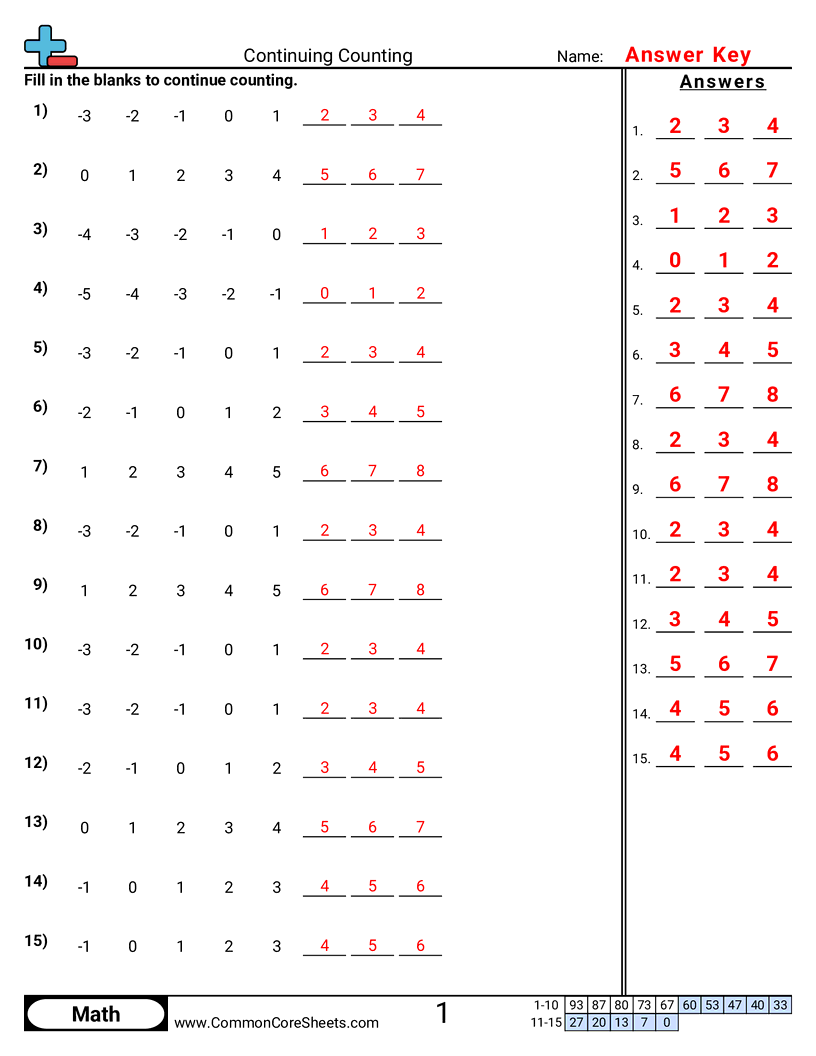
Counting Within 120
- Practice saying and writing the next numbers in order up to 120.
- Count forward from any starting number instead of always starting at 1.
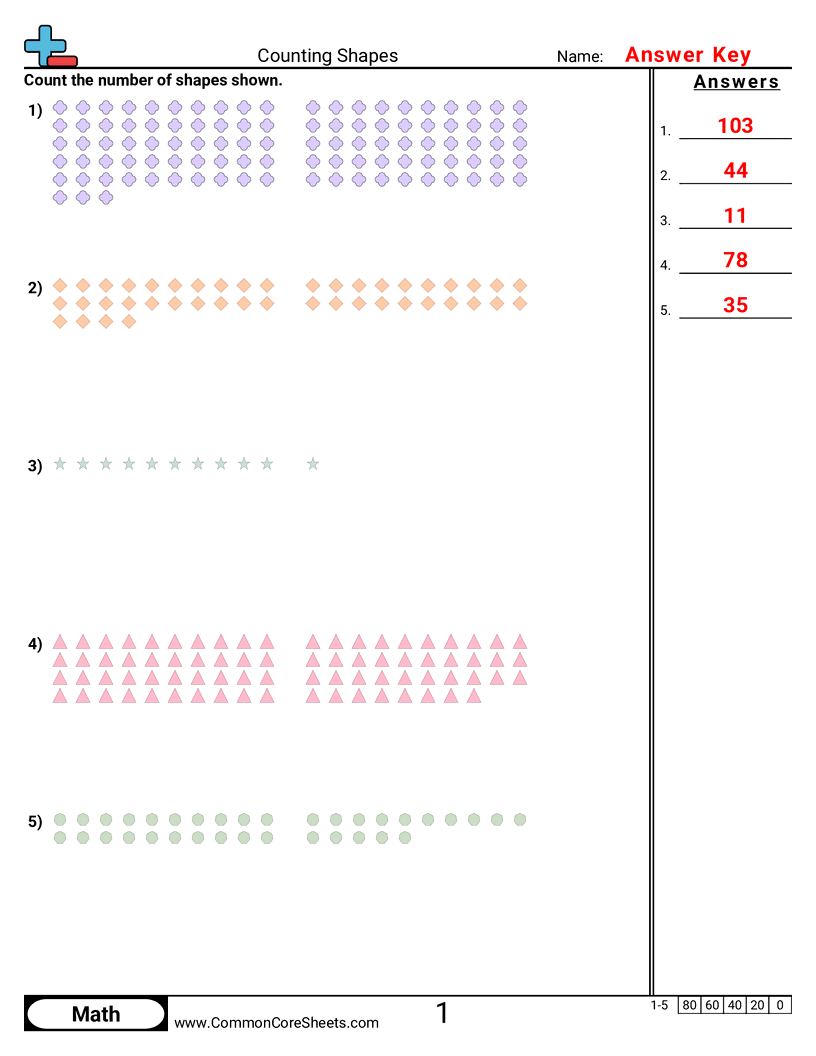
Counting Shapes
- Count how many shapes are in a picture and write the total.
- Keep track while counting so you don’t skip or double-count shapes.
- Count shapes arranged in rows or groups by using a quick counting strategy instead of counting one by one.
About these worksheets
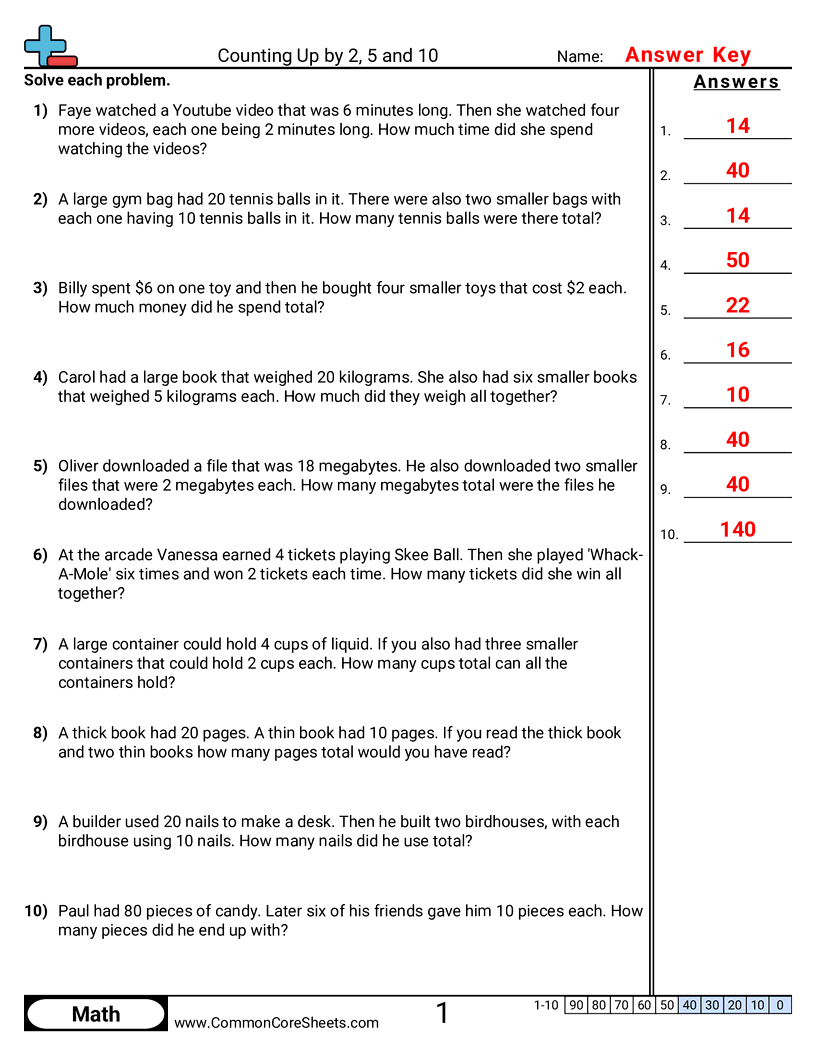
Skip counting worksheets help students recognize number patterns by counting in intervals of 2, 5, 10, and 100. Students practice finding missing numbers in skip-counting sequences and continuing patterns from various starting points. These activities build the foundation for multiplication and strengthen place value understanding for second graders.
Skip Counting (5s 10s 100s)
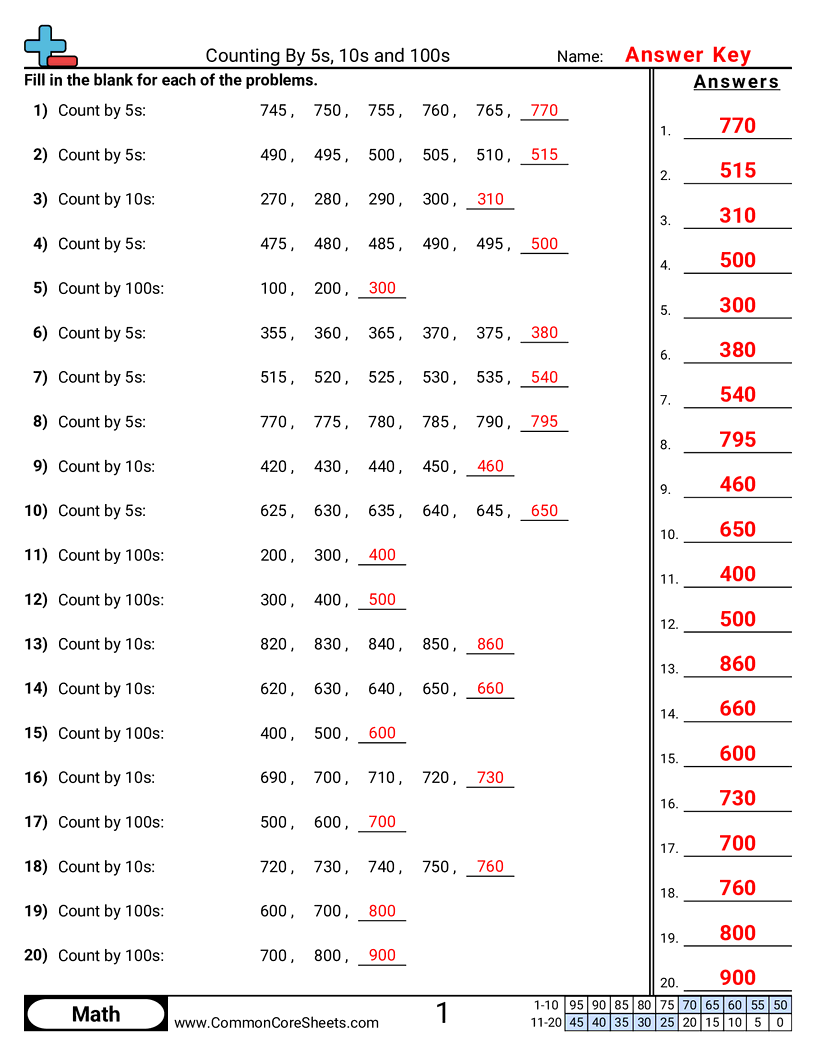
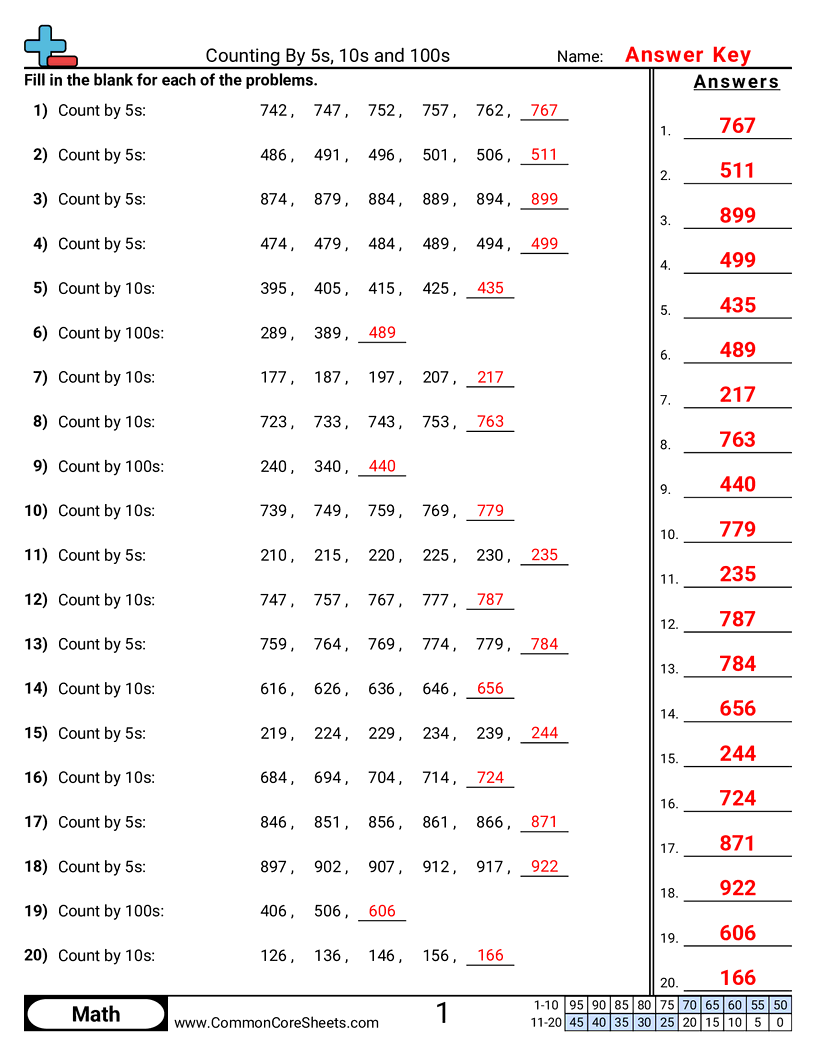
- Count forward by 5s, 10s, and 100s to continue a number pattern.
- Find the missing number in a skip-counting sequence.
- Use what you know about place value to see how the digits change when you add 5, 10, or 100.
- Recognize that skip counting lands on multiples of 5, 10, and 100.
Skip Counting (10s 100s)
- Count forward by 10s and 100s starting from different numbers.
- Spot the pattern in a number sequence and choose the next number.
- Use place value to explain why the numbers change the way they do when you add 10 or 100.