subtraction Addition Worksheets
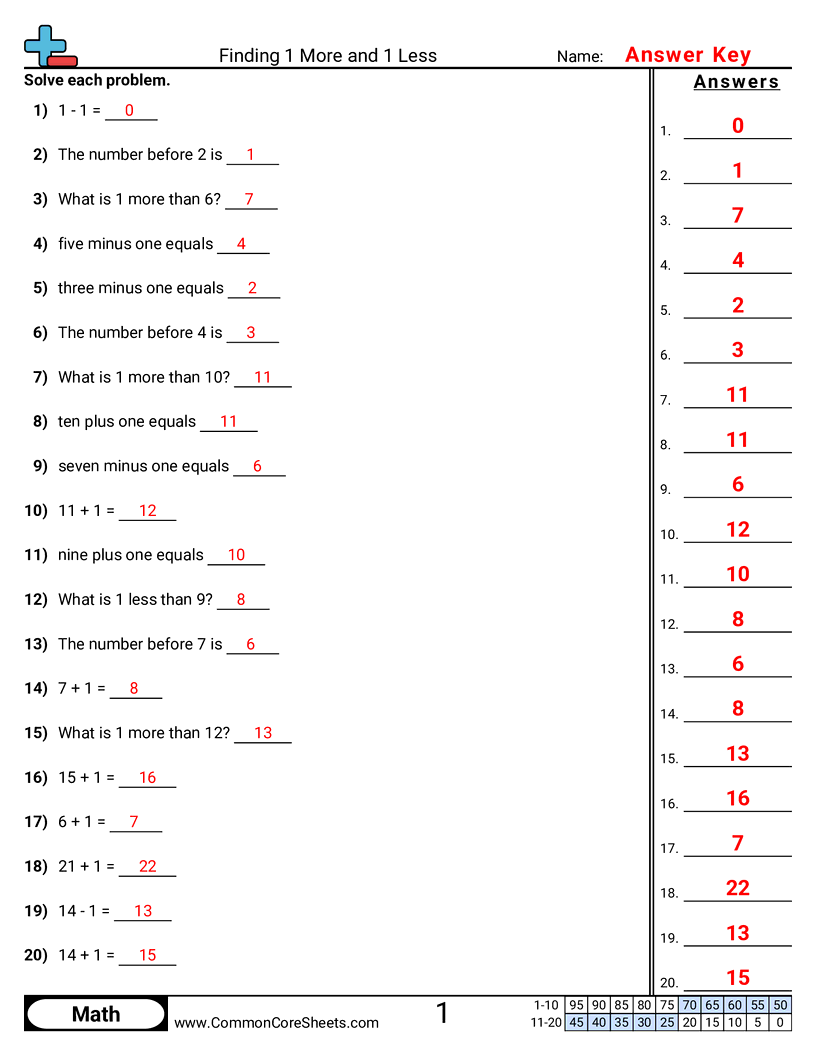
These subtraction addition worksheets combine both operations to help students master fundamental math skills. The mixed problem format reinforces the relationship between addition and subtraction, building stronger number sense and computational fluency through varied practice exercises.
About these worksheets
These worksheets introduce students to the foundational concepts of addition. Activities include matching pictures to addition sentences, identifying number pairs that make 10, breaking apart two-digit numbers into tens and ones, and counting up and down within 20. Designed primarily for kindergarten and first grade, these resources help young learners connect visual representations to number sentences and build early number sense before moving on to traditional addition problems.
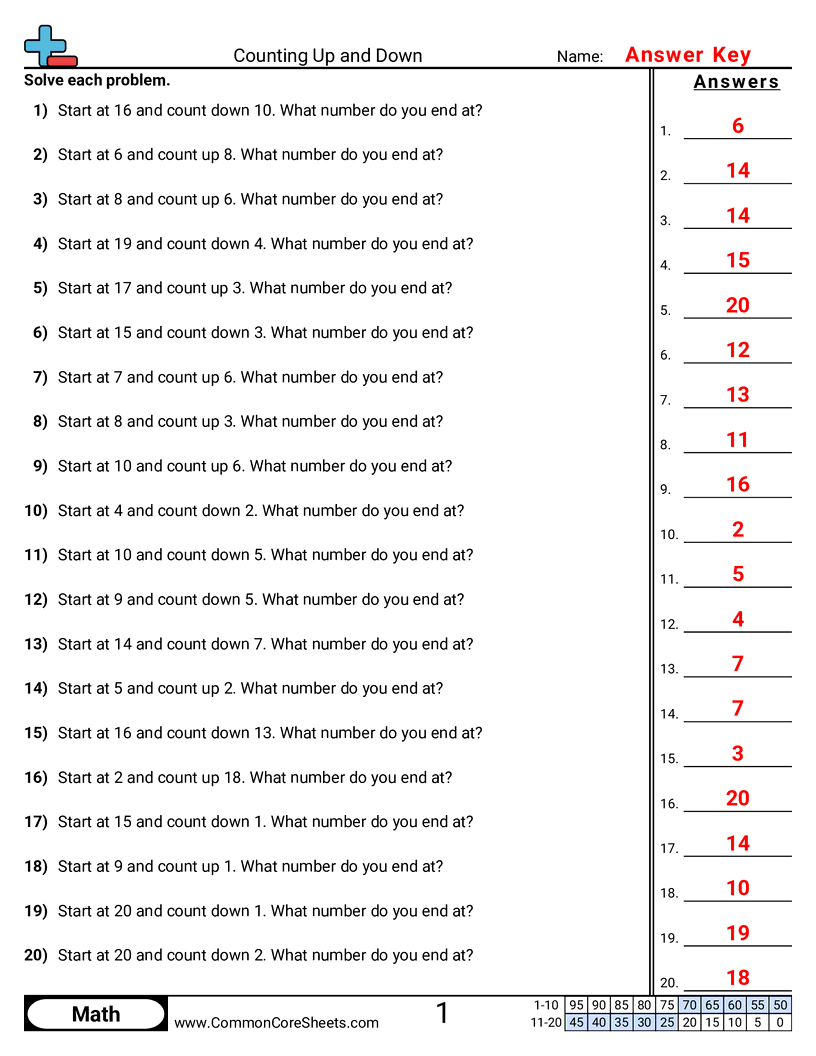
Counting Up and Down
- Practice counting up from a given number to find a larger number
- Practice counting down from a given number to find a smaller number
- Connect counting up and counting down to basic addition and subtraction
About these worksheets
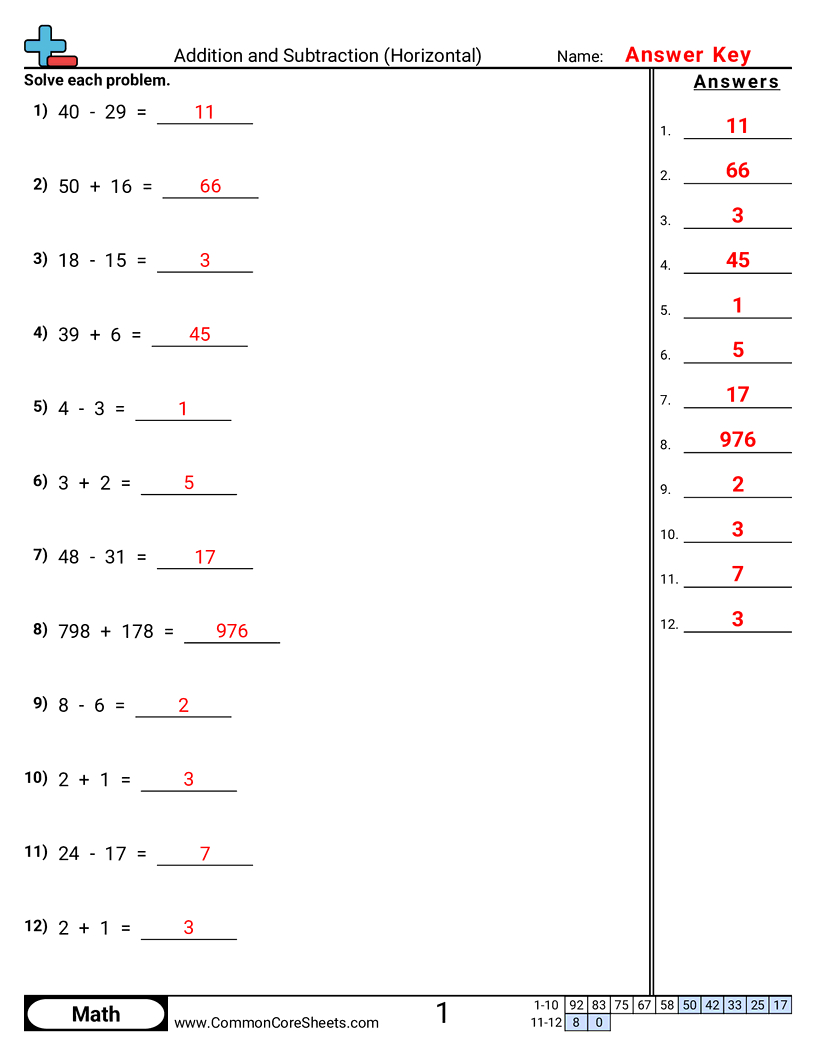
Practice standard addition problems ranging from simple sums within 5 all the way up to four-digit plus four-digit addition. Worksheets are available in both vertical and horizontal formats and cover key skills like regrouping (carrying), adding multiples of ten, finding missing addends, and solving mixed addition and subtraction problems. These resources align with Common Core standards from kindergarten through fourth grade, giving students structured practice at every level.
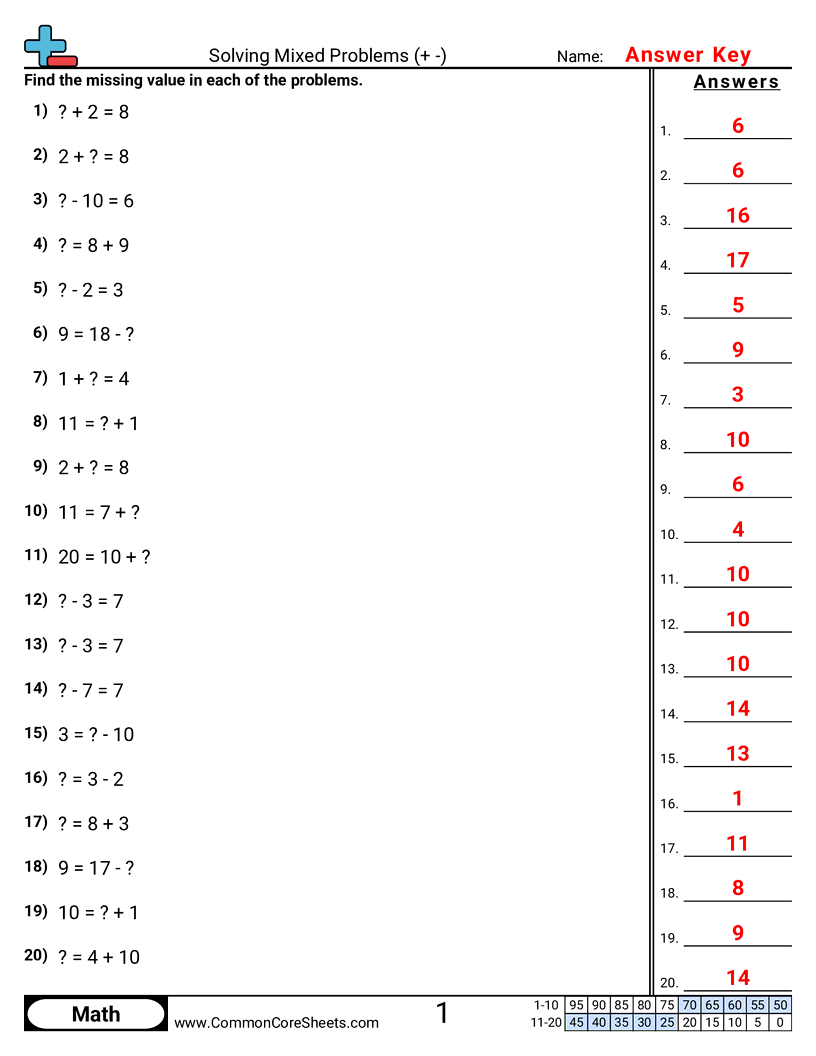
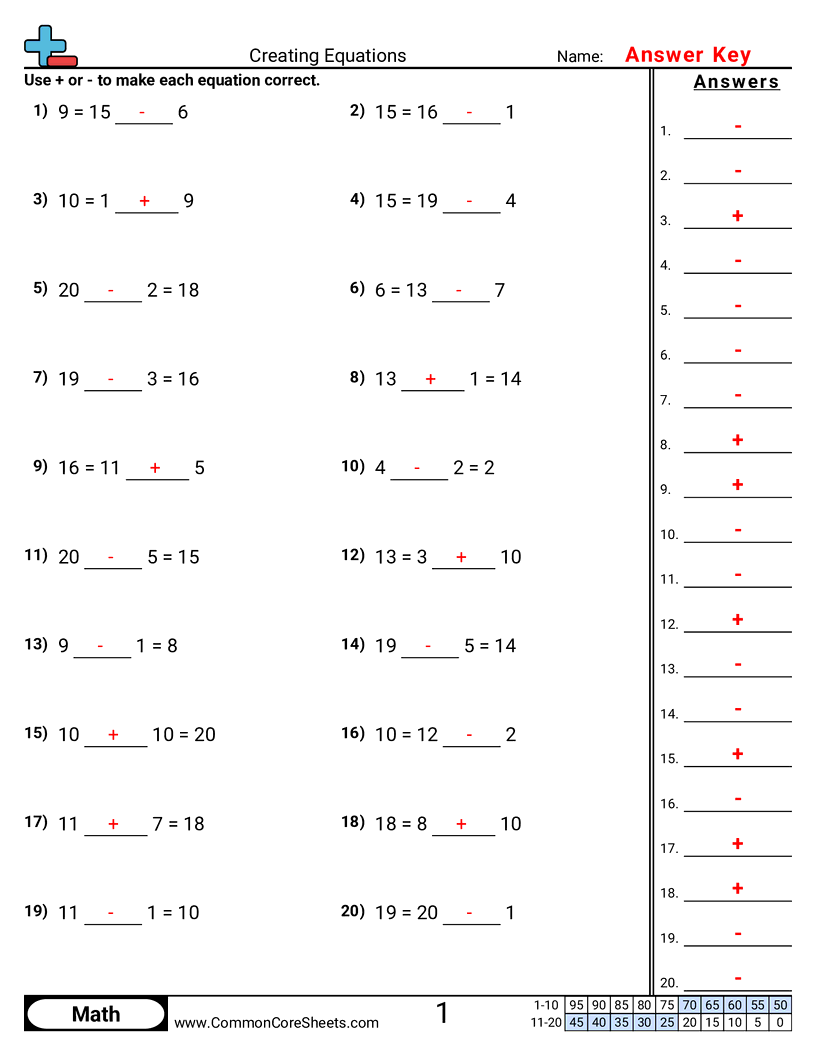
Solving Mixed Problems within 20 (+ -)
- Practice finding a missing number in addition and subtraction equations
- Get comfortable seeing the unknown in different spots — at the beginning, middle, or end of an equation
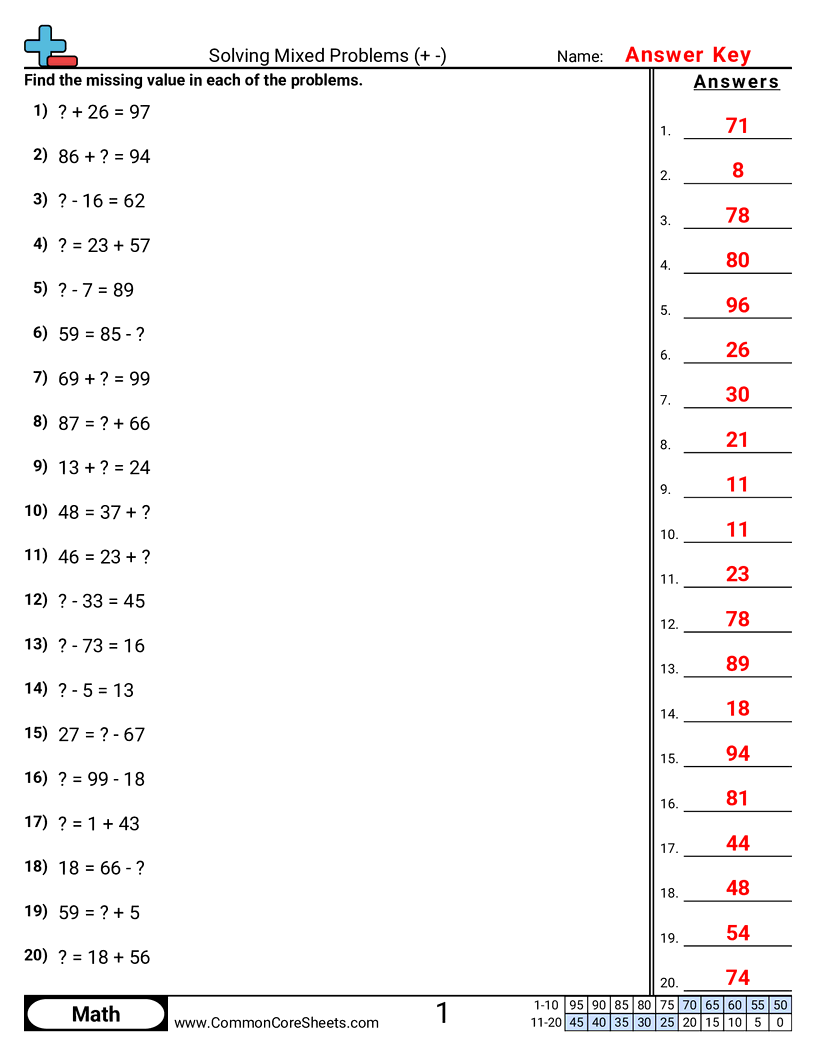
Solving Mixed Problems within 100 (+ -)
- Practice subtracting two-digit numbers to find how many are left or how many more are needed.
- Decide whether to add or subtract based on the symbols in the problem.
- Work carefully with place value so the ones and tens stay in the right spots.
- Practice finding a missing number in addition and subtraction equations
- Get comfortable seeing the unknown in different spots — at the beginning, middle, or end of an equation
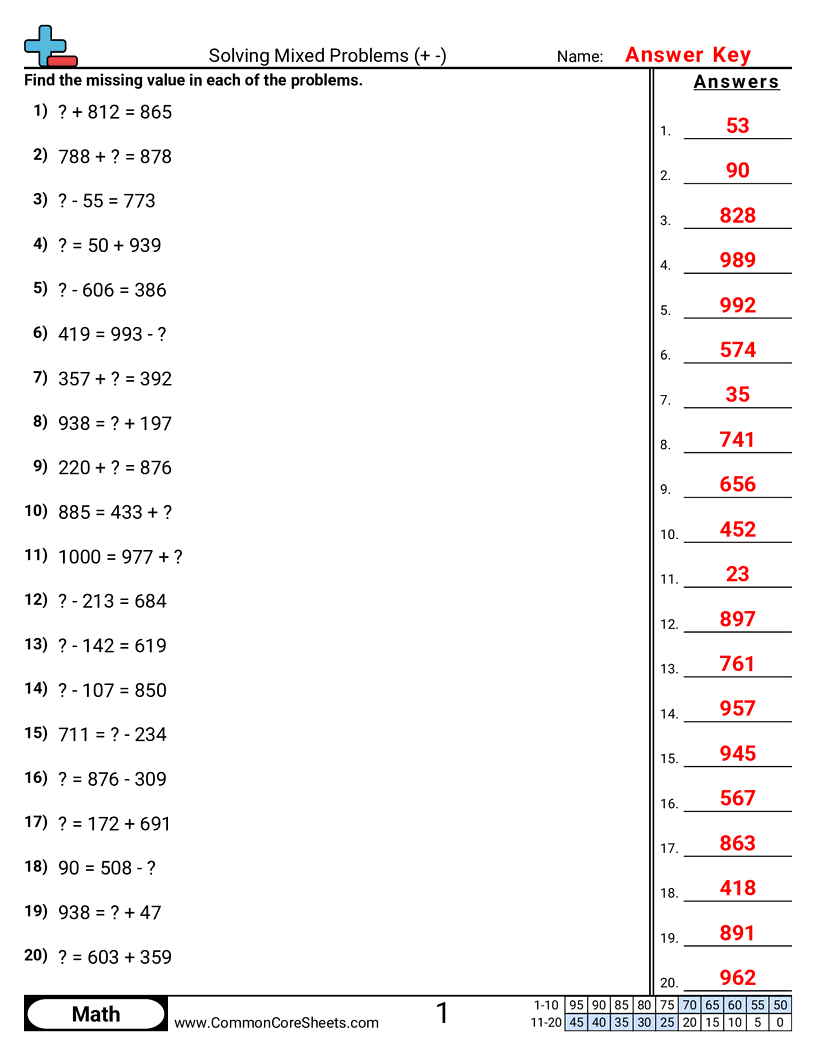
Solving Mixed Problems within 1000 (+ -)
- Practice adding and subtracting numbers up to 1,000 accurately.
- Decide whether to add or subtract based on the symbols in the problem.
- Use regrouping when needed to solve multi-digit addition and subtraction.
- Keep digits lined up by place value so the answer makes sense.
- Practice finding a missing number in addition and subtraction equations
- Get comfortable seeing the unknown in different spots — at the beginning, middle, or end of an equation
About these worksheets
Word problems help students apply addition skills to real-life situations. These worksheets present short story problems where students identify the important numbers, choose the right operation, and write a number sentence to find the answer. Problem sets are available at three difficulty levels — within 10, within 20, and within 100 — making them suitable for kindergarten through second grade.
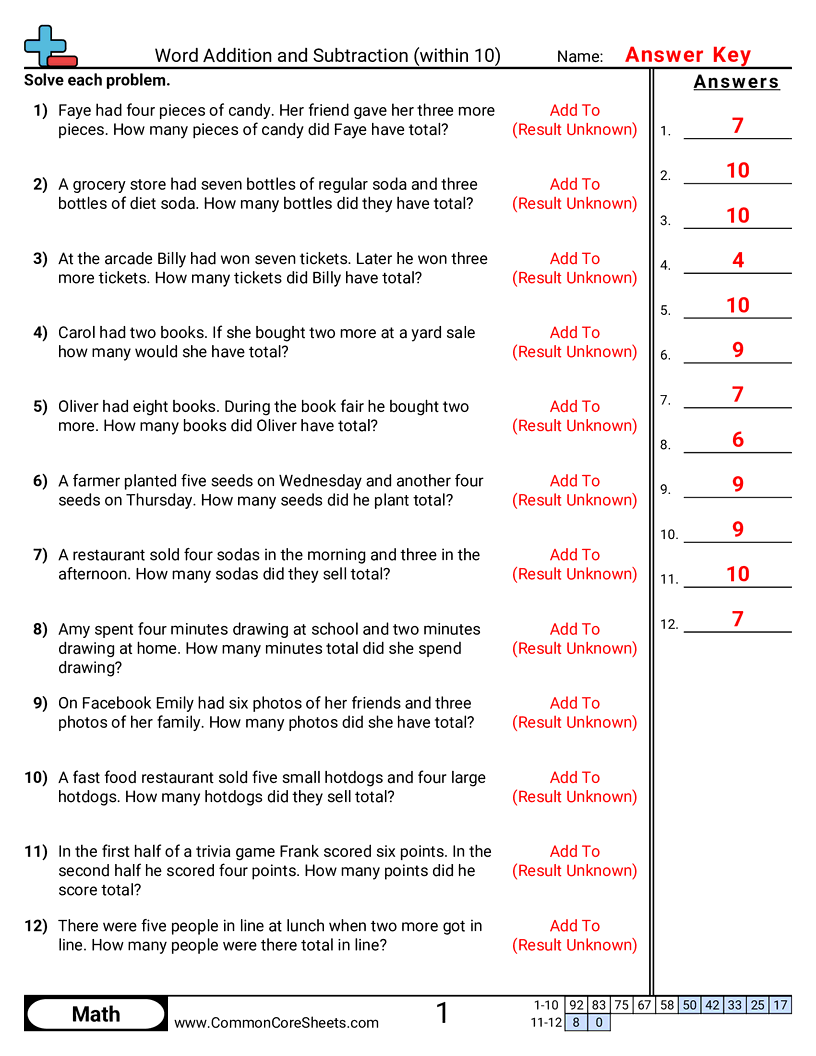
Word Addition Within 10
- Solve simple story problems by figuring out what two groups are being put together.
- Add two numbers within 10 to find the total.
- Use words like total, sum, and altogether to understand what the question is asking.
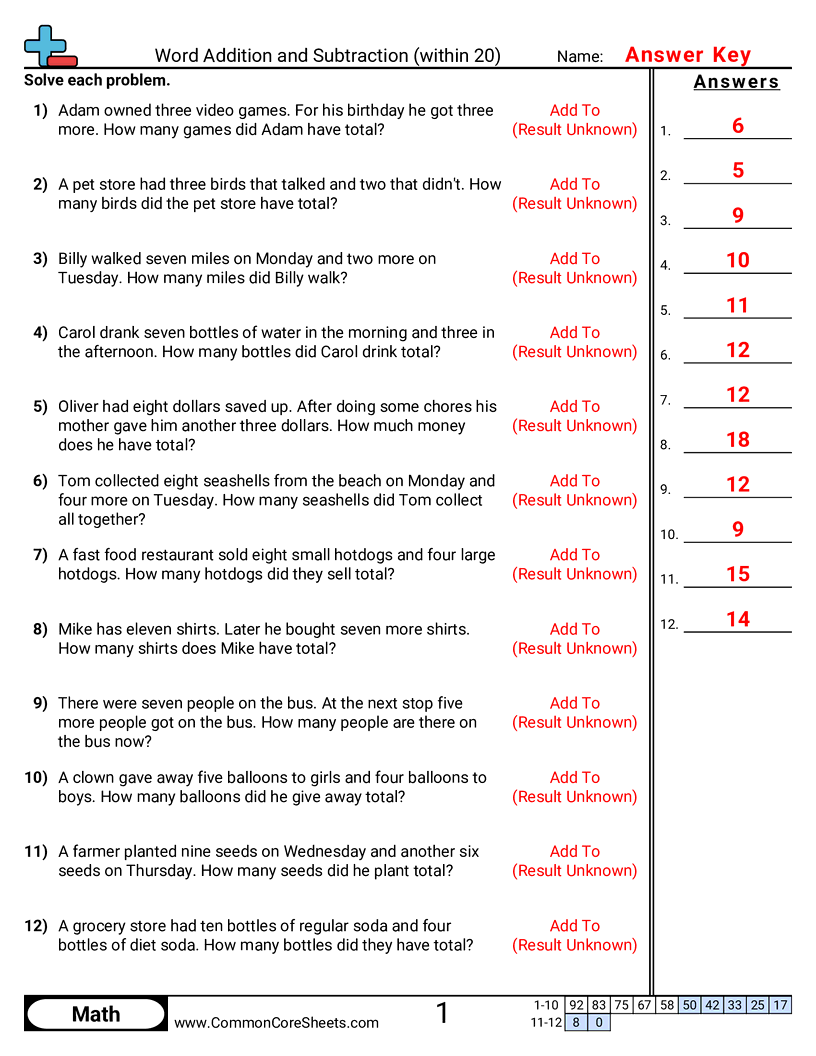
Word Addition Within 20
- Solve simple story problems by figuring out what two amounts need to be added.
- Pick out the important numbers and words in a word problem and ignore extra details.
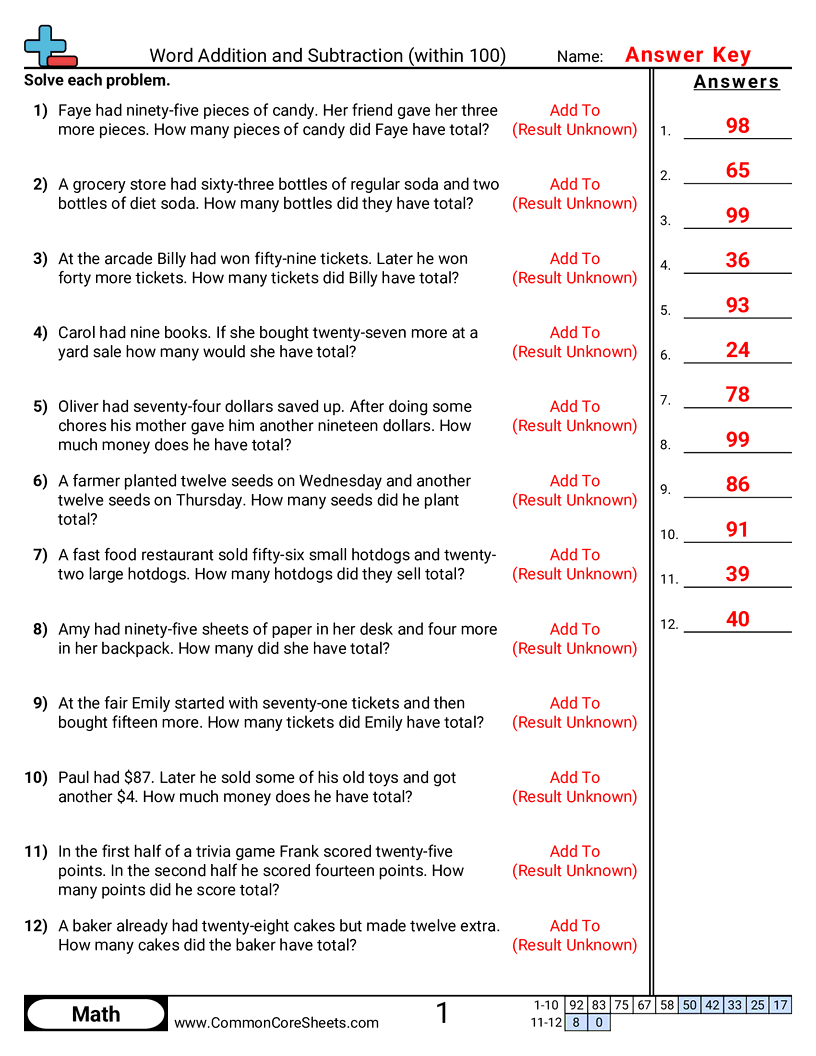
Word Addition Within 100
- Read a short story problem and figure out what numbers need to be added.
- Add two numbers up to 100 to find the total.
- Use clue words like "in all" and "altogether" to know it’s an addition problem.
About these worksheets
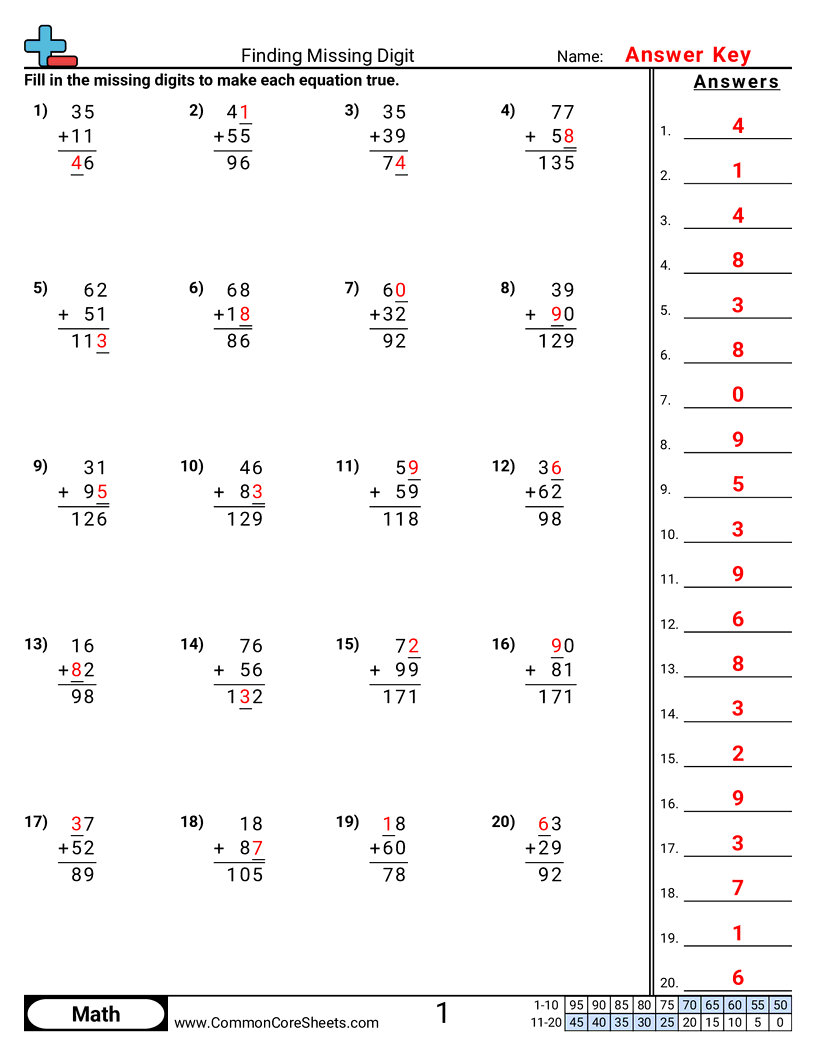
Beyond memorizing facts, students need strategies to add efficiently. These worksheets cover key techniques including making a ten, using open and closed number lines, finding equivalent addition problems, identifying missing digits, estimating sums with rounding, and breaking numbers apart by place value. These strategy-based activities help students build flexible thinking and mental math skills that support fluency with larger numbers.
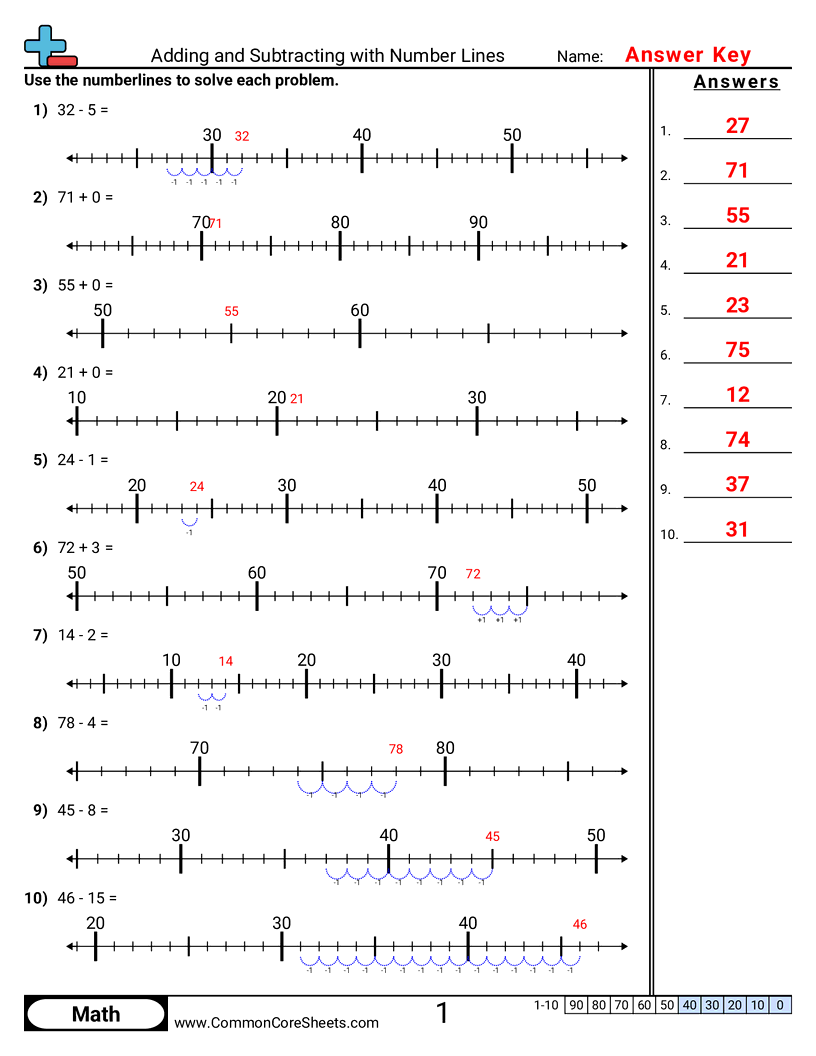
Finding Sum And Differences with Numberlines
- Use a horizontal number line to add by making forward jumps from a starting number.
- Use a horizontal number line to subtract by making backward jumps from a starting number.
- Count and label each jump to model the addend or subtrahend correctly.
- Write the final landing point on the number line as the sum or difference.
About these worksheets
Timed drills build speed and accuracy with basic addition facts. Each worksheet contains 50 to 100 problems focused on a specific fact family — from 0s through 10s — plus mixed fact sets that combine all families. Additional drill sheets cover adding and subtracting within 20, finding ten more and ten less, adding 9s using mental math shortcuts, and adding to reach multiples of ten. These are ideal for daily warm-ups, fact fluency practice, or timed assessments.
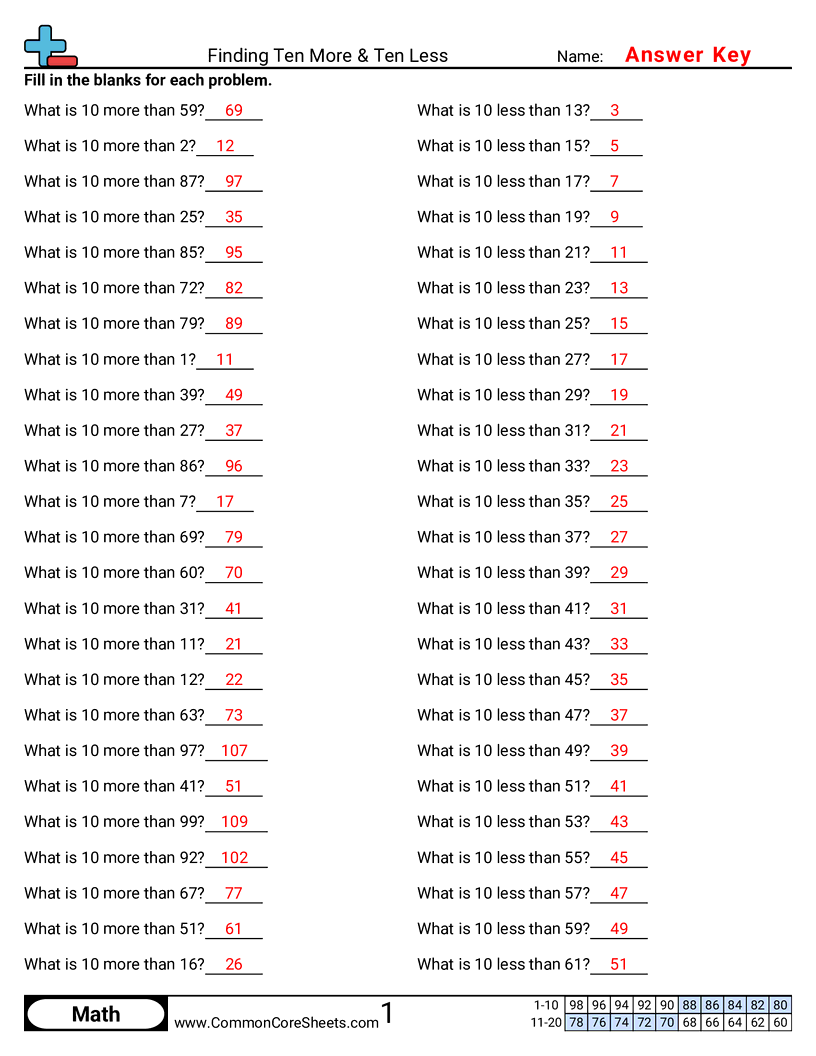
Finding Ten More and Ten Less
- Find ten more or ten less than a two-digit number.
- Use place value to see how changing the tens digit changes the number.
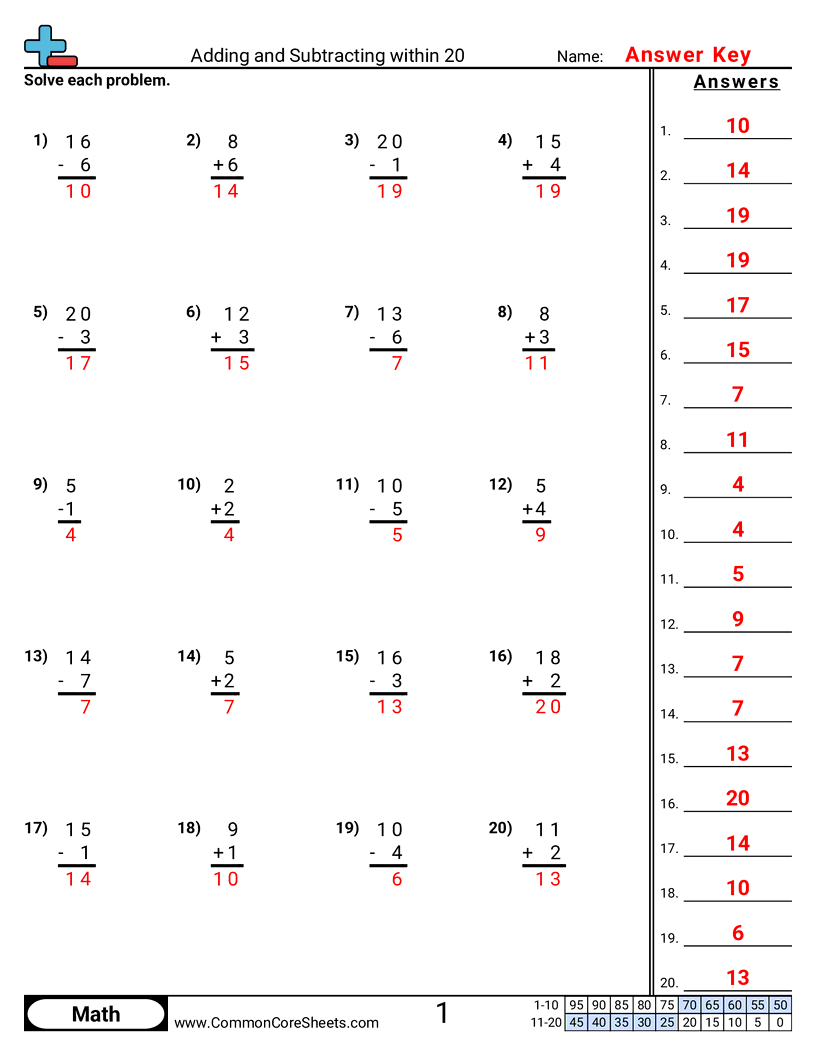
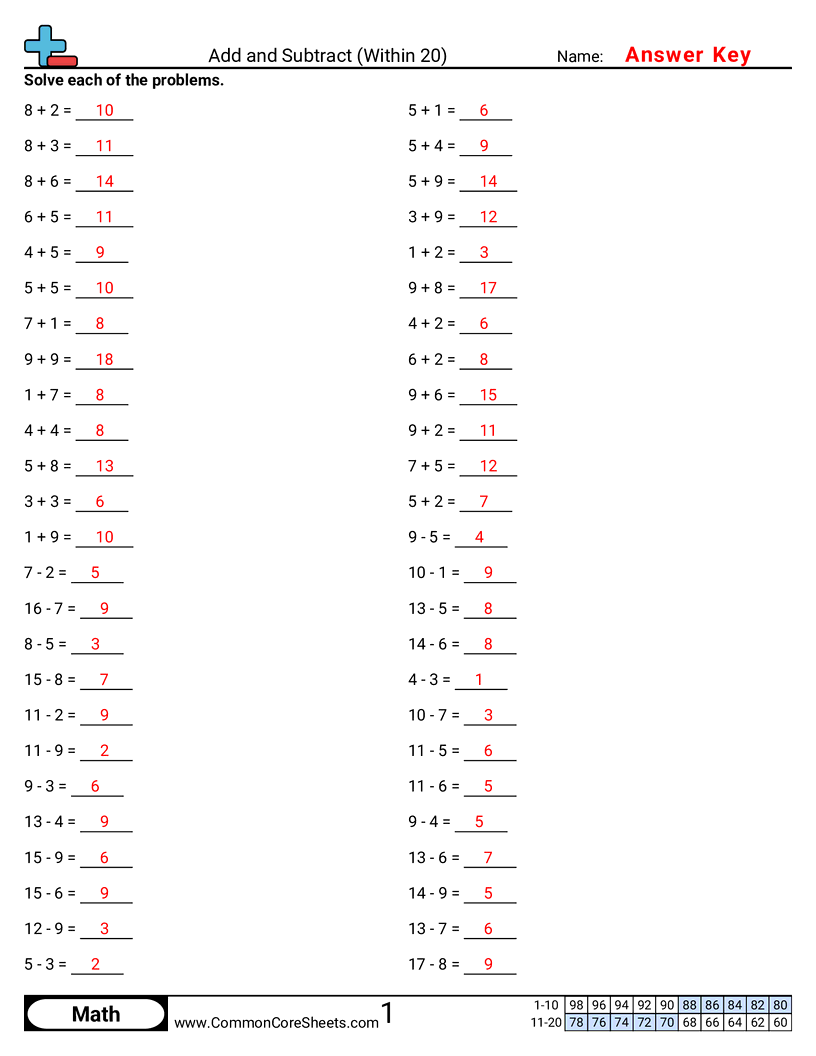
Add and Subtract (Within 20)
- Add two numbers with sums up to 20.
- Subtract a number from another number and find the difference up to 20.
- Build speed and accuracy with basic addition and subtraction facts.
Adding-Subtracting 10s and 100s
- Find 10 more or 10 less than a number by changing the tens digit.
- Find 100 more or 100 less than a number by changing the hundreds digit.
- Use place value to keep the ones digit the same when adding or subtracting tens and hundreds.
- Do quick mental math with three-digit numbers without writing out long addition or subtraction.